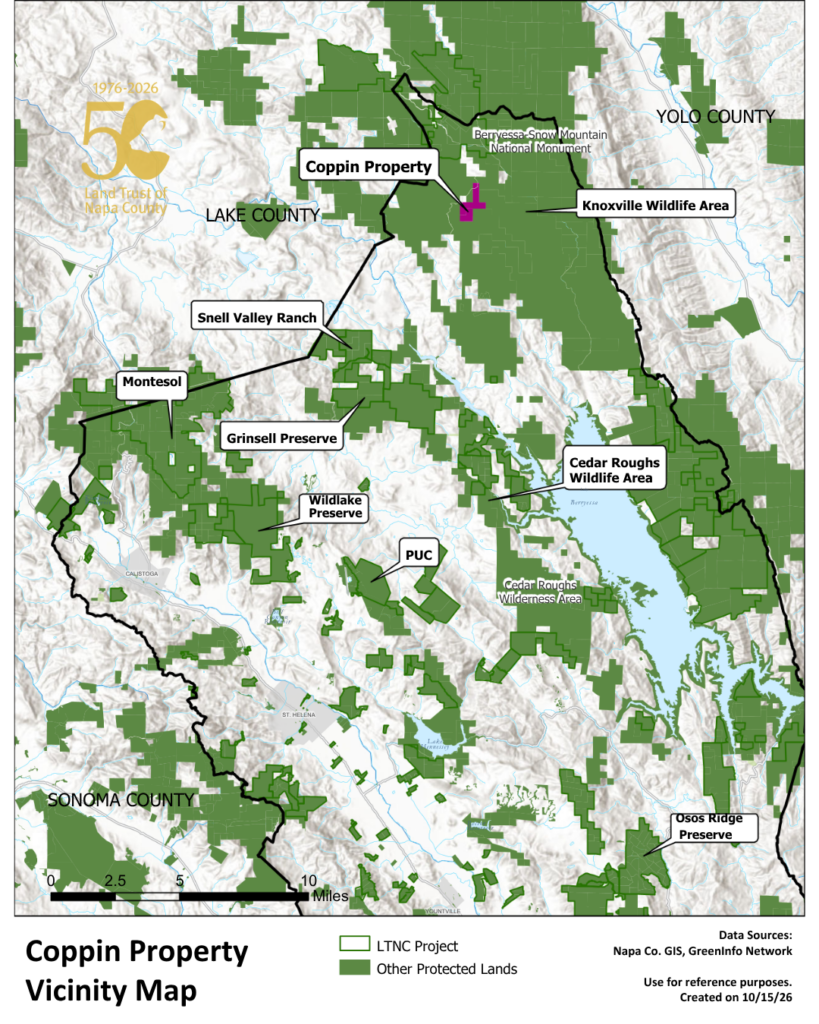
The Land Trust of Napa County today announced the upcoming acquisition of the 436-acre Coppin property, a critical private holding nestled within the Knoxville Wildlife Area. The landmark $1 million acquisition, fully funded by a grant from the state Wildlife Conservation Board, permanently protects a high-priority wildlife corridor, eliminates two potential homesites and safeguards essential agricultural watershed lands.
“When we realized the ticking clock on the purchase agreement might cost us this incredible land, we knew the Land Trust had to step in as a bridge,” said Melanie Parker, chief executive officer of the Land Trust of Napa County. “The Coppin property is a beautiful, missing piece of the puzzle right inside the national monument footprint. Animals rely on this exact corridor to migrate all the way from Lake Berryessa up to the Oregon border. It is a massive win for conservation that we simply couldn’t let slip away.”
“Protecting this property is an important step toward preserving one of the North Bay’s most important wildlife corridors,” said Jennifer Norris, executive director of the Wildlife Conservation Board. “Expanding the Knoxville Wildlife Area will help keep habitats connected, protect native species and ensure this landscape remains conserved for future generations.”
Located east of Napa Valley, the undeveloped property represents a vital piece of the conservation grid. It is bordered to the east by the California Department of Fish and Wildlife’s 20,000-acre Knoxville Wildlife Area and surrounded by federal Bureau of Land Management lands on the north, west and south. Positioned within the highest-priority wildlife corridor in the North Bay, according to the Bay Area Critical Linkages Project, the property is a crucial link in a contiguous 7-million-acre expanse of protected lands stretching from Lake Berryessa to the Oregon border.
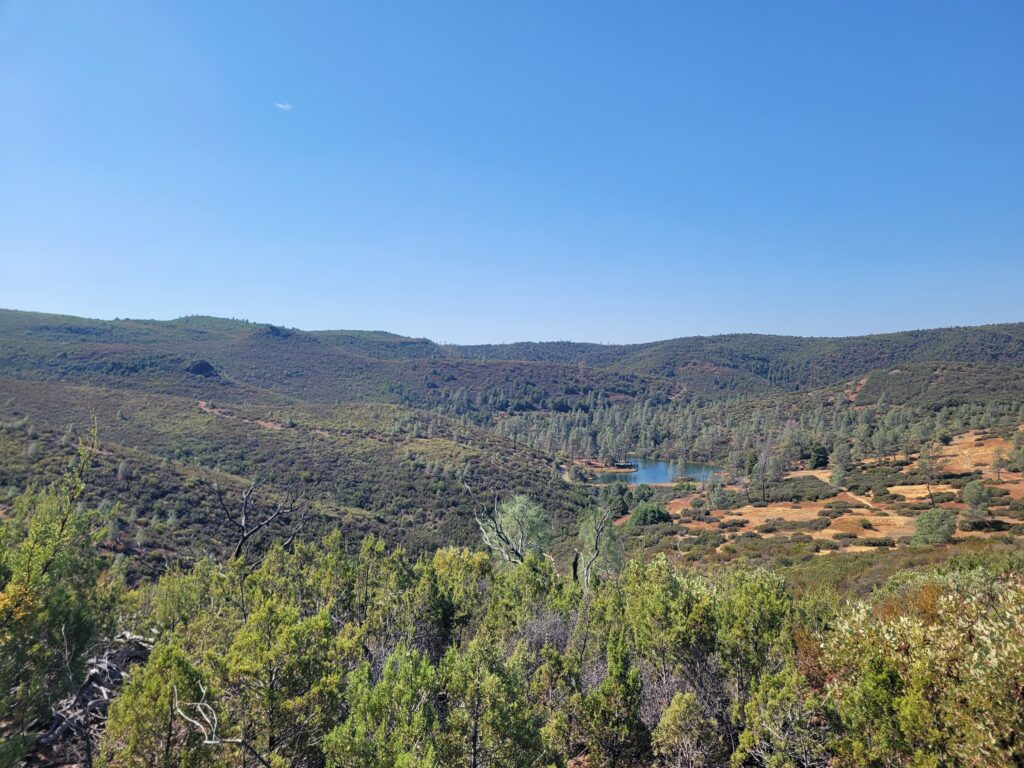
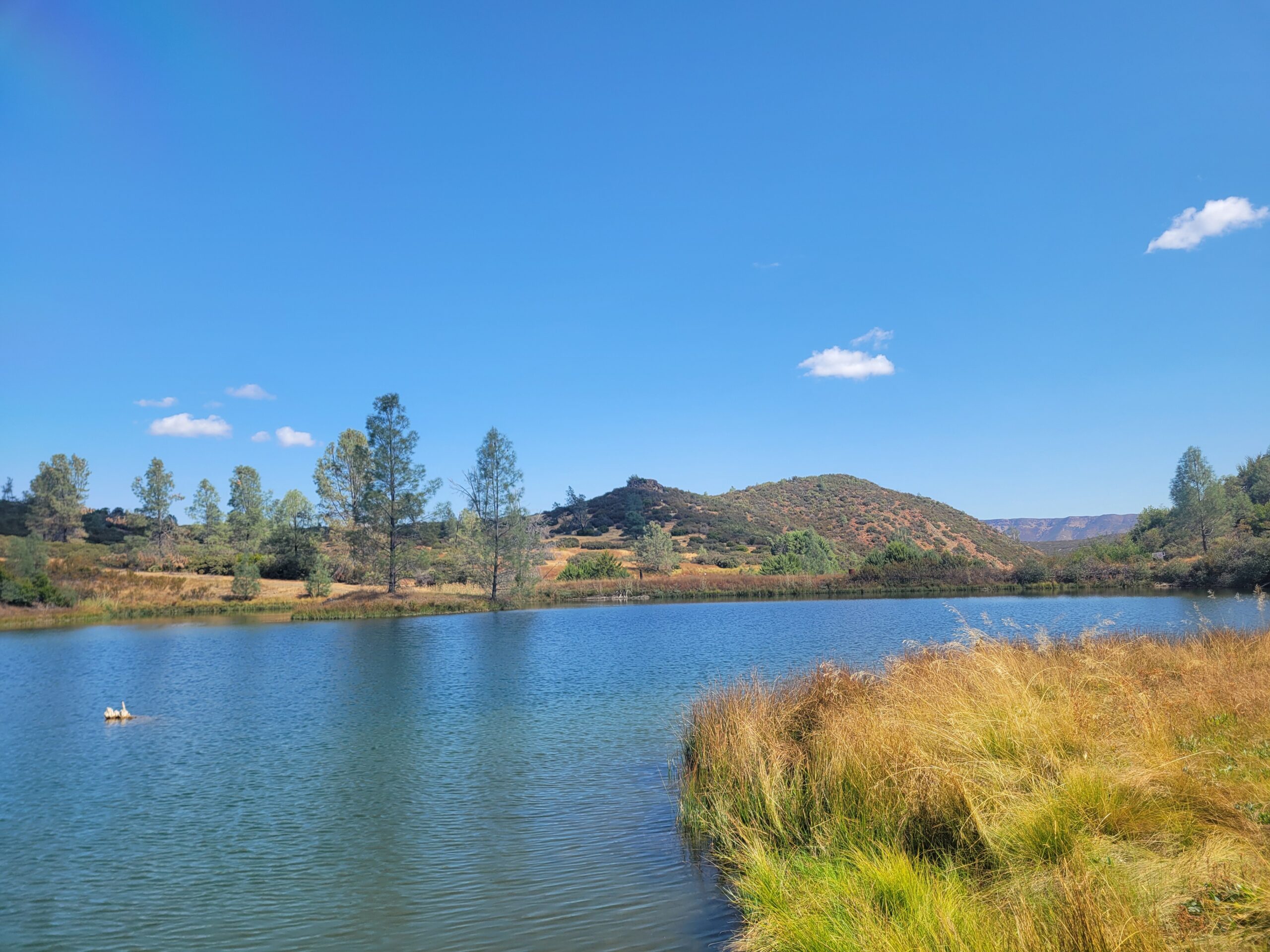
The property boasts exceptional ecological value, earning the highest rank of essential by the Conservation Lands Network for achieving regional conservation goals. It ranks at the top tier for terrestrial connectivity in the state fish and wildlife department’s Areas of Conservation Emphasis. The land features over a mile of Zim Zim Creek and a 4-acre stock pond within the Putah Creek watershed, which flows into Lake Berryessa. It also provides critical habitat for several special-status species, with documented occurrences of the Northern Interior Cypress Forest, the drymaria-like western flax, northwestern pond turtle and the foothill yellow-legged frog directly on site.
To prevent losing the time-sensitive opportunity before the Oct. 15 closing, the Land Trust structured a bridge transaction supported by state partners. Because the state’s internal review could not be completed in time for the Wildlife Conservation Board’s August meeting, the Land Trust is acquiring the property directly utilizing the state grant. The Land Trust will manage the property during an interim holding period before transferring the land to the state at no cost, allowing it to be permanently integrated into the Knoxville Wildlife Area.