
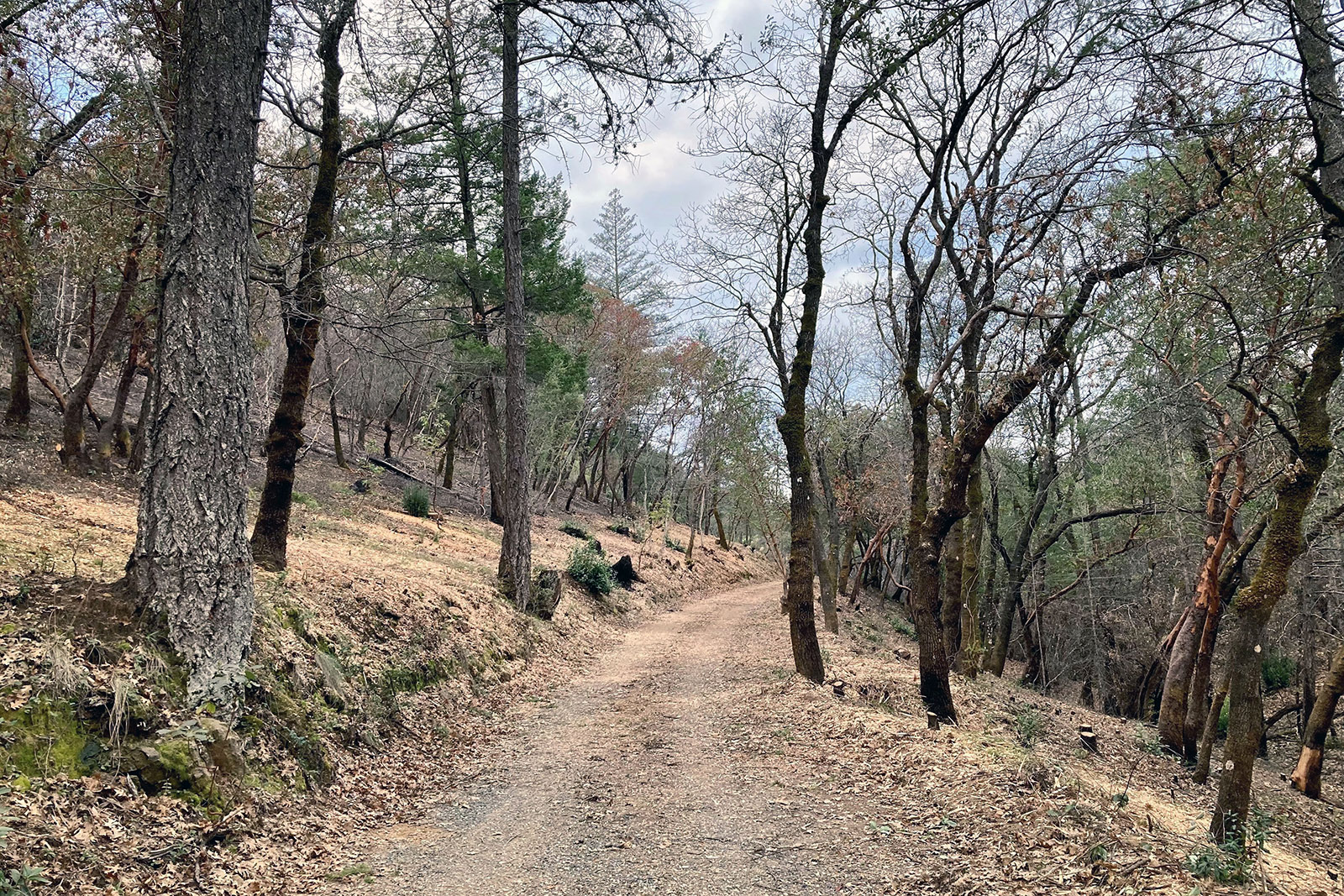
As June marks the start of peak wildfire season in Northern California, the Land Trust of Napa County is advancing critical efforts to protect local communities and landscapes through proactive land stewardship, including two recently completed thinning and prescribed burns totaling more than 200 acres of strategic fuels reduction.
These efforts come at a pivotal time, as hotter, drier conditions increase wildfire risk across the region. By investing in science-based forest management before fires ignite, the Land Trust is working to reduce fire intensity, improve firefighter access, and strengthen the resilience of forests and nearby neighborhoods.
In recent months, LTNC completed approximately 100 acres of fuels reduction at its Dunn-Wildlake Preserve, where the 2025 Pickett Fire was successfully held from advancing into the community of Angwin. The project, supported by the USDA’s Emergency Forest Restoration Program and CAL FIRE, focused on key ridgelines and access roads critical for fire suppression.
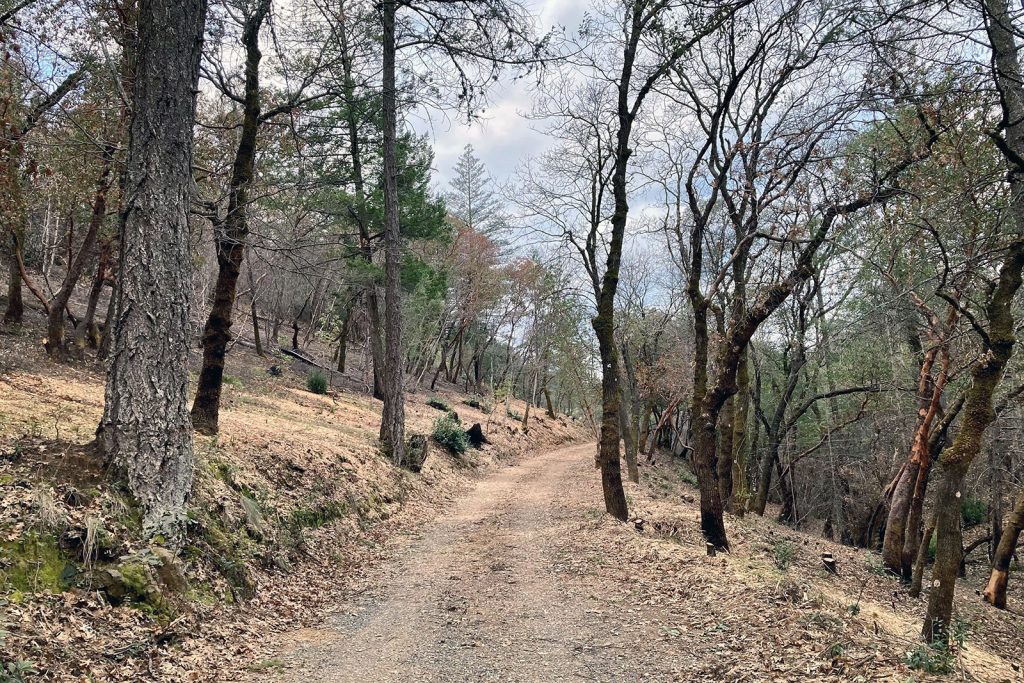
At the same time, the Land Trust completed more than 100 acres of forest thinning and conducted prescribed burns at its Aetna Springs Preserve, in partnership with CAL FIRE and the Napa County Resource Conservation District. These treatments build on earlier work, including shaded fuel breaks along Aetna Springs Road that played a key role in slowing both the 2020 Glass Fire and the 2025 Pickett Fire.
Photo: Our shaded fuel break at the Aetna Springs Preserve promotes resiliency against extreme wildfire impacts.
Together, these projects mark a significant expansion of LTNC’s wildfire resilience strategy across the Angwin and Aetna Springs landscape, building on earlier work at Linda Falls Preserve and surrounding lands.
“Our focus is simple: do the work before the fire starts,” said Mike Palladini, Stewardship Director for the Land Trust. “Prescribed burns and targeted thinning reduce the fuels that drive extreme fire behavior, giving firefighters safer conditions and helping protect nearby communities.”
Prescribed fire is a critical tool in restoring forest health. By intentionally burning accumulated vegetation under controlled conditions, crews reduce hazardous fuel loads while mimicking the region’s natural fire cycles. Historically, low-intensity fires — often set by Indigenous communities — helped maintain open, resilient forests. Decades of fire suppression, however, have left many areas overcrowded and vulnerable to high-severity wildfire.
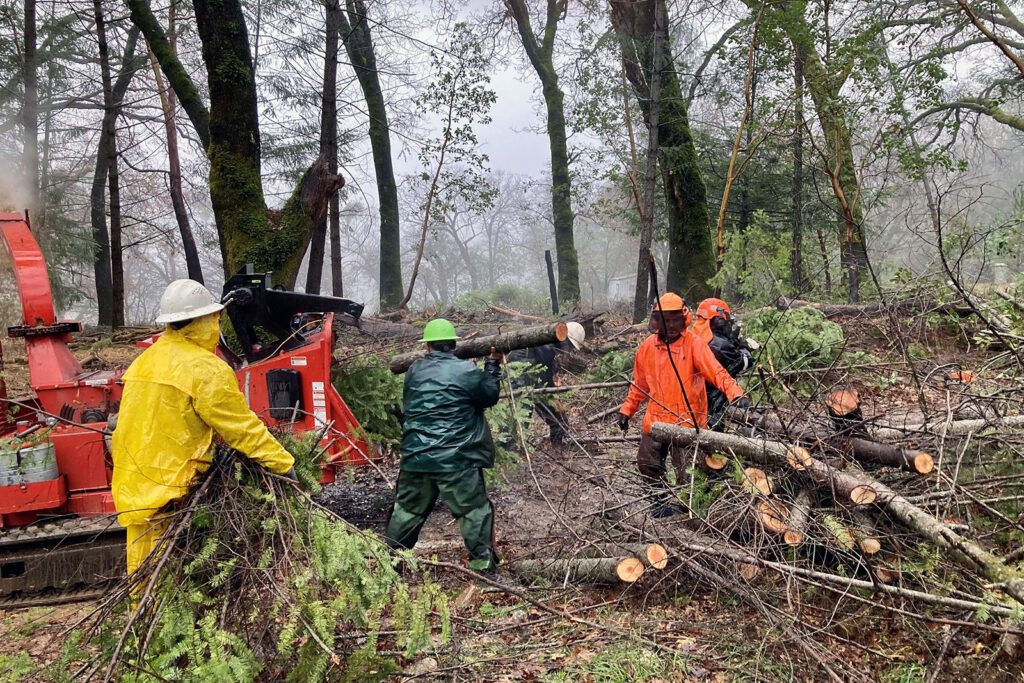
In addition to prescribed burns, crews removed dense undergrowth, small trees, and “ladder fuels” — vegetation that allows fire to climb from the forest floor into the canopy, where it can spread rapidly and become more destructive.
Photo: Crews remove ladder fuels within Aetna Springs Preserve.
The benefits of this work were evident during the Pickett Fire. Firefighters reported that previously treated areas on Land Trust preserves experienced lower fire intensity and provided safer, more effective access for suppression efforts. Maintained roads and fuel breaks allowed crews to reach strategic locations, conduct backburns, and contain the fire more efficiently.
“This isn’t theoretical,” Palladini said. “Firefighters told us directly that our past work made a real difference on the ground — giving them better access, better visibility, and more options to protect the community.”
Beyond wildfire protection, these projects also improve forest health, watershed function, and wildlife habitat. Thinning overcrowded stands allows mature native trees such as Douglas-fir, oak, madrone, and California bay laurel to thrive, while reducing competition for water in drought-prone conditions.
The work also strengthens defenses in Napa County’s wildland-urban interface — where homes and wildlands meet and wildfire risk is highest.
Fuels reduction at this scale requires long-term planning, environmental review, and sustained investment. LTNC’s efforts reflect ongoing collaboration with public agencies and local partners, as well as a shared commitment to protecting Napa County’s landscapes and communities.
With wildfire risk continuing to grow, the Land Trust emphasizes that proactive stewardship remains one of the most effective tools available.
With a subscription, you may read the Napa Register story here.