
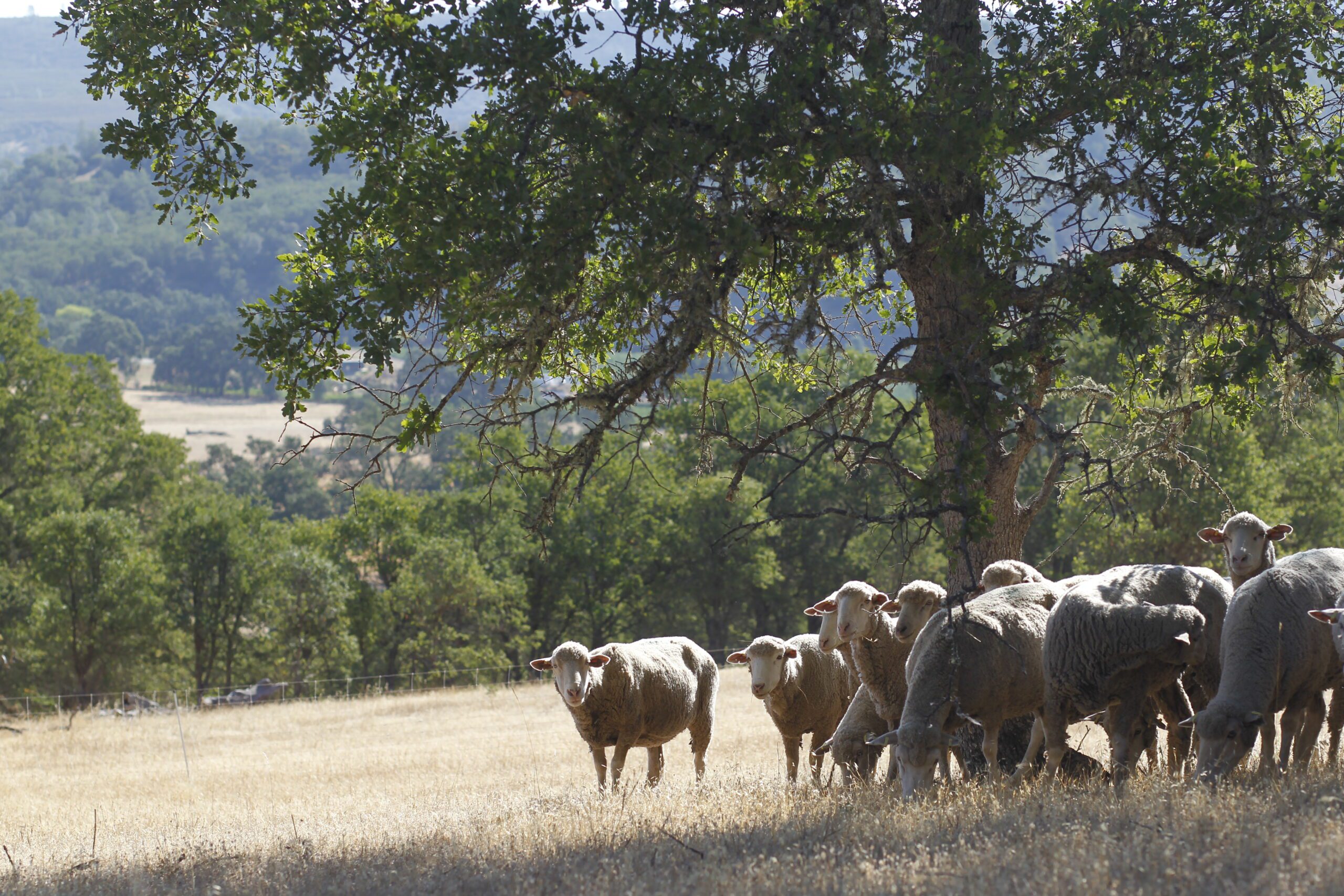
The Land Trust of Napa County is proud to announce the publication of new applied research in the peer-reviewed journal Ecological Solutions and Evidence. The paper, titled “Dry-season grazing enhances native diversity in invaded oak woodlands,” highlights how carefully managed grazing practices can increase native plant diversity in California’s oak woodland ecosystems.
The research, co-authored by Mike Palladini, Stewardship Director, and Dr. Tosha Comendant, Senior Stewardship Program Manager at the Land Trust, represents years of fieldwork, data collection, and implementation of grazing as a restoration treatment on the Land Trust’s Wantrup Preserve in Pope Valley.
The study tested how targeted grazing – strategically timed to reduce a heavy buildup of invasive plant growth during the dry season – affects native plants in the understory of oak woodlands. Removing this heavy buildup of invasive, dried-out plant cover can reduce stressors on native wildflowers and grasses, potentially giving them a boost. The results are highly encouraging – managed dry-season grazing significantly increased both the number of native plant species and the cover of native plant species – thereby bolstering biological diversity, a critical component of ecological health and resilience.
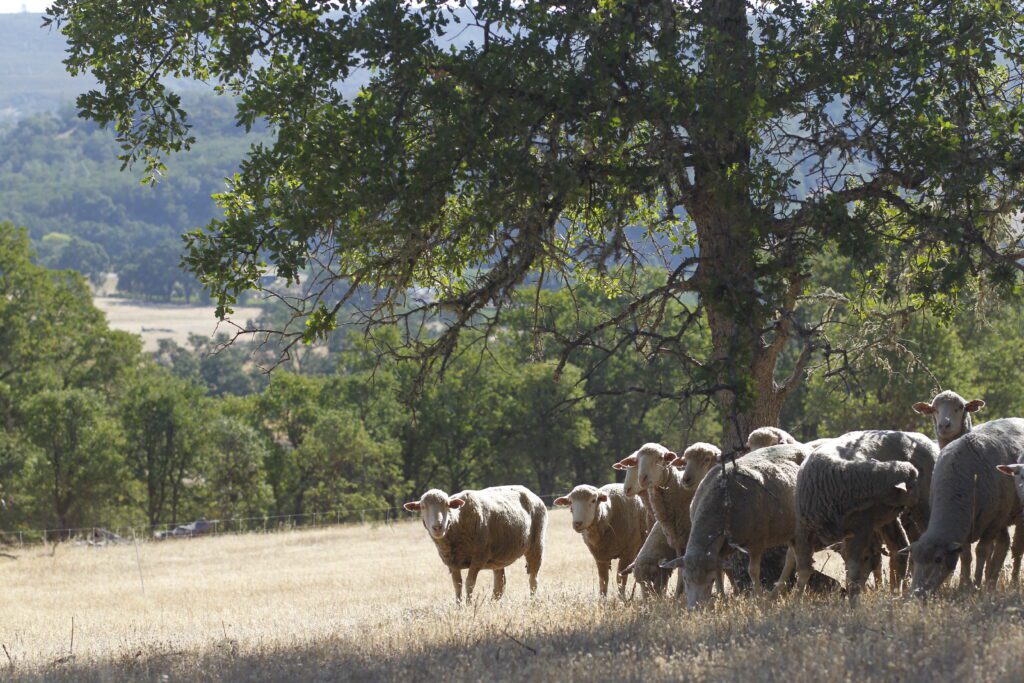
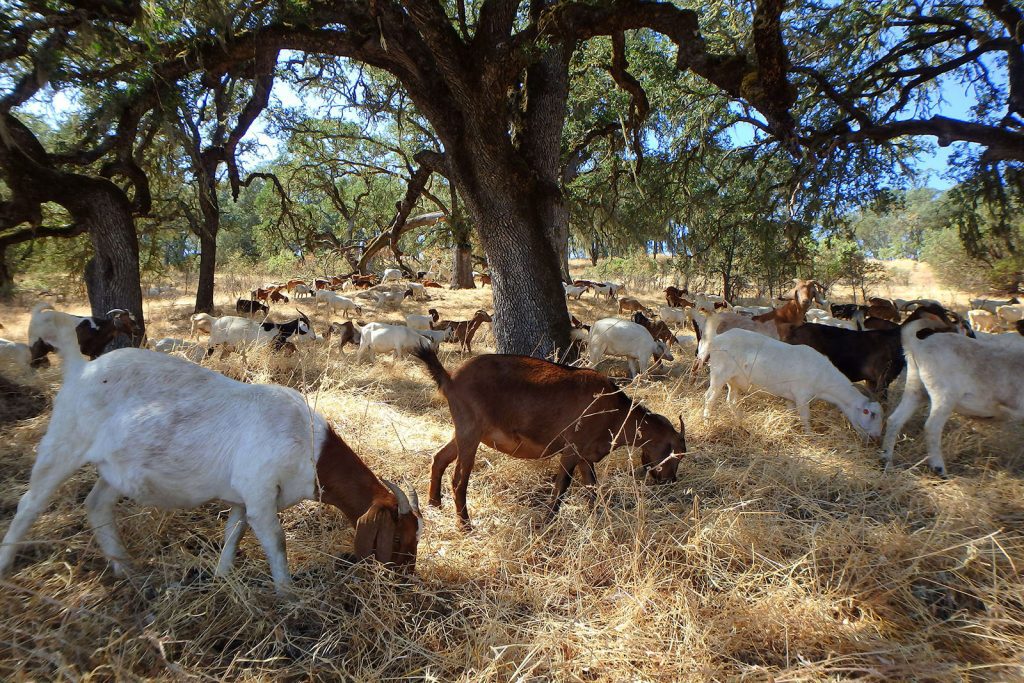
“This research confirms what many land managers have observed anecdotally for years, that grazing, when applied with intention and ecological insight, can be a powerful tool for restoration,” said Dr. Comendant. “We’re thrilled to contribute to the growing body of science supporting adaptive management and restoration of natural areas.”
The paper was authored in partnership with Dr. Justin Valliere, Assistant Professor of Cooperative Extension in Invasive Weed and Restoration Ecology at UC Davis, Dr. Morgan Gray, Principle and Quantitative Ecologist at Pisaster, and professional botanist Jake Ruygt. The collaboration reflects the Land Trust’s commitment to advancing land stewardship through applied science, partnership, and long-term ecological monitoring.
“This study highlights how well-planned grazing can reduce fuel loads, lower fire risk, and support native biodiversity, ultimately strengthening the resilience of California’s oak woodlands. It also underscores the value of collaborative, science-based restoration for evaluating and improving land management practices,” said Dr. Valliere.
“This is an exciting accomplishment for our land stewardship program,” said Mike Palladini. “It highlights the value of a data-driven, evidence-based approach to addressing land stewardship challenges.”
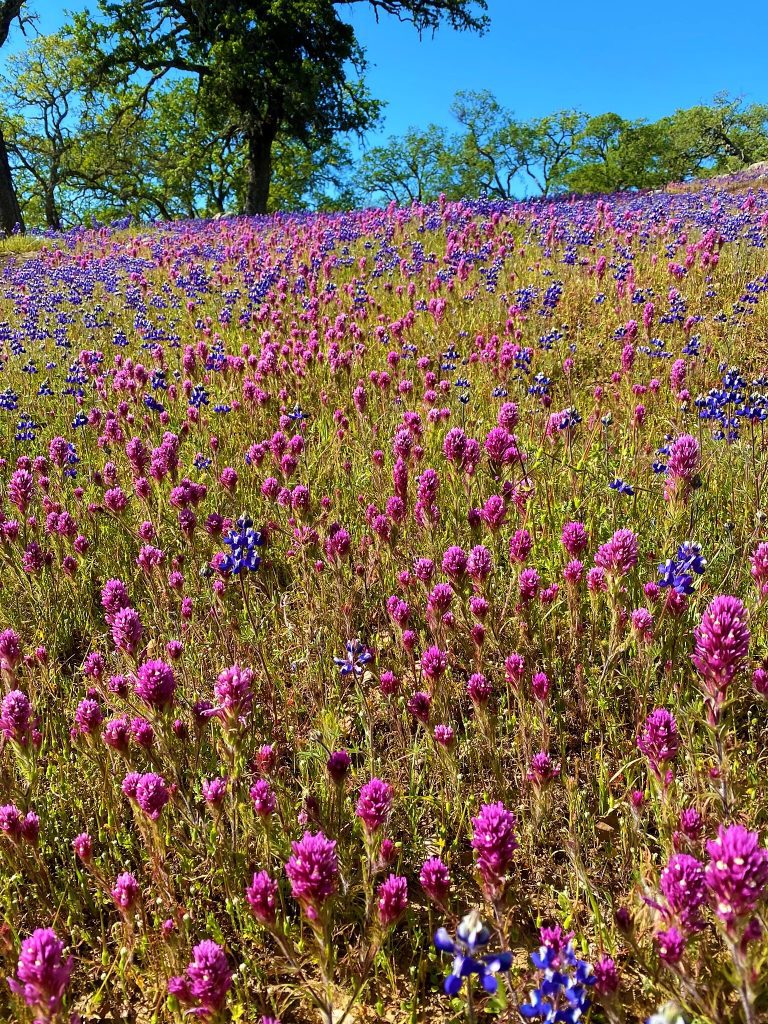
Tangible Results: Purple-Owl’s Clover (Castilleja exserta) and Sky Lupine (Lupinus nanus) flourish in a post-grazing study area at Wantrup Preserve.
The article is available open-access through the Wiley Online Library: https://besjournals.onlinelibrary.wiley.com/doi/10.1002/2688-8319.70149
View the Napa Register story here.