2025 Pickett Fire
A wildfire that began on the outskirts of Calistoga on August 21, 2025, ultimately burned across three Land Trust preserves, testing years of pre-fire fuels reduction and road access improvement work completed by the Land Trust, and demonstrating the importance of our active land management program.
When the Pickett Fire ignited on a privately owned property along Pickett Road within the city of Calistoga, it spread rapidly across steep terrain. As it advanced, the fire crossed property boundaries and moved onto three Land Trust preserves—Duff, Dunn-Wildlake, and Aetna Springs, burning more than 2,100 acres of protected land. These preserves contain important habitat for a broad array of wildlife, and support a highly diverse flora, including numerous rare plant species.
Stewardship That Made a Difference
Land Trusts Preserves Heavily Utilized for Fire Suppression and Containment
The Land Trust’s undeveloped wildland properties proved crucial in effectively fighting the Pickett Fire, preventing it from reaching neighborhoods and communities. We now have confirmation from firefighters assigned to the fire that four Land Trust fuels reduction and road access improvement projects within the fire footprint helped reduce fire severity and aided in containment. Senior Land Trust staff actively coordinated with CAL FIRE, Napa County Fire, Napa Community Firewise Foundation, members of the Napa County Board of Supervisors, and preserve neighbors during the fire, participating in daily briefings at the incident command center throughout the incident.
Land Trust Preserve Roads Heavily Utilized for Emergency Access to Key Areas
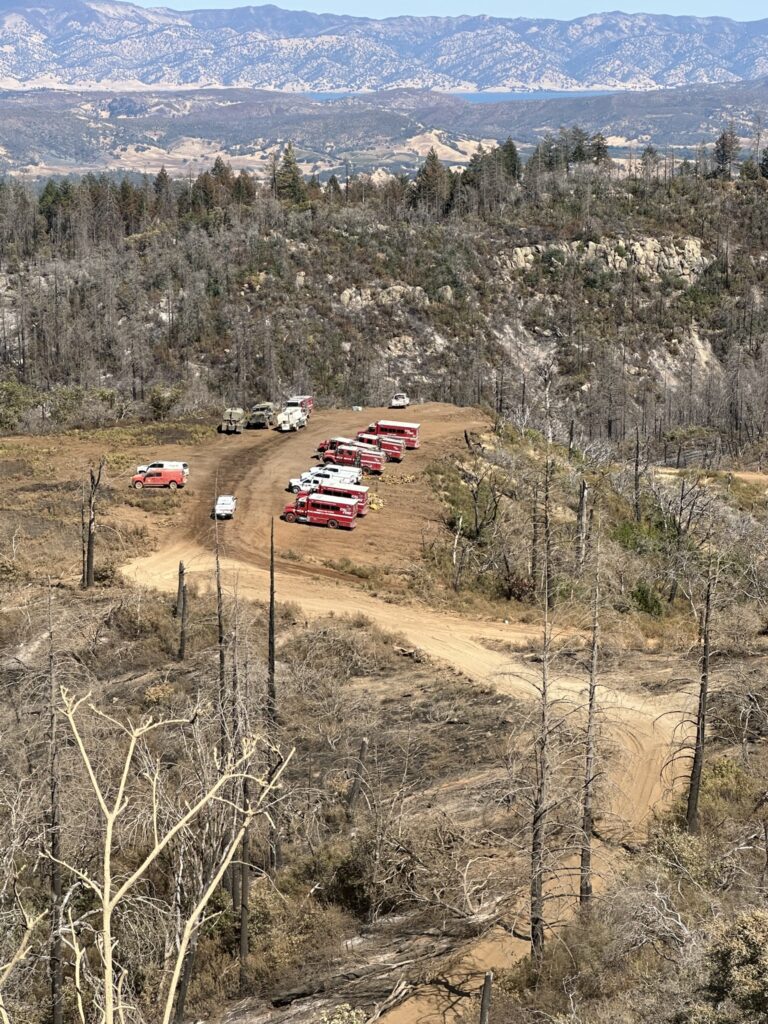
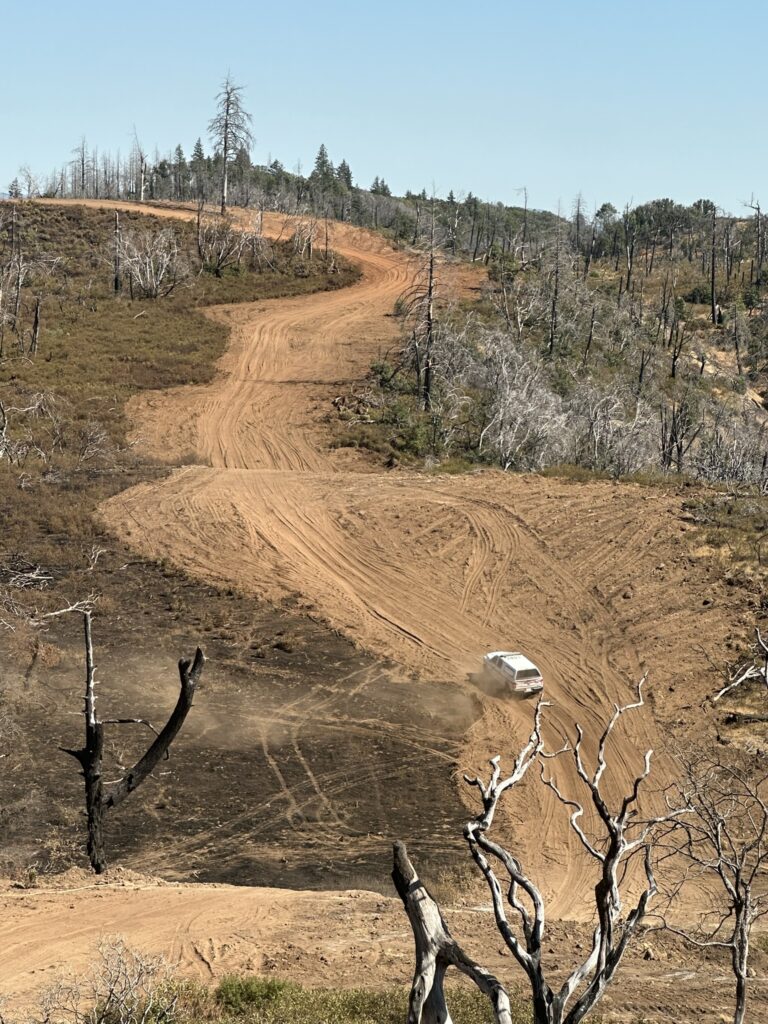
The Land Trust actively maintains over 90 miles of access road on its preserves. Improved road systems on all three Land Trust preserves within the Pickett Fire area were heavily utilized for fire suppression and containment.
The Land Trust had completed erosion prevention, clearing, and repair on its Dunn-Wildlake Preserve road system near Angwin prior to the fire. Firefighters heavily utilized these roads to access and hold the fire along key ridgelines. Additionally, prior to the Fire, the Land Trust partnered with the Napa Communities Firewise Foundation to re-establish and improve key road connections between the Duff Preserve and adjacent access points. These roads also proved key to emergency access and firefighting efforts during the Fire.
Land Trust Forest Thinning Reduced Fire Severity and Facilitated Containment
In addition to emergency road access, two forest management projects that the Land Trust had completed on the Aetna Springs Preserve were shown to have reduced fire severity and helped contain the fire.
With support from the Natural Resources Conservation Service, the Land Trust implemented a roadside shaded fuel break project along the entire 1.6 miles of Aetna Springs Road running through the preserve in 2022. In 2023, the Land Trust implemented a 32-acre forest understory thinning project within the Preserve, significantly reducing ladder fuel loads.
We now have confirmation from firefighters operating in the area during the fire that these areas were heavily used for defensive firing operations (back burning) to help successfully contain the fire along Aetna Springs Road. In addition, the fire intensity in these project areas was low overall.
A Mosaic of Impacts and Early Signs of Resilience
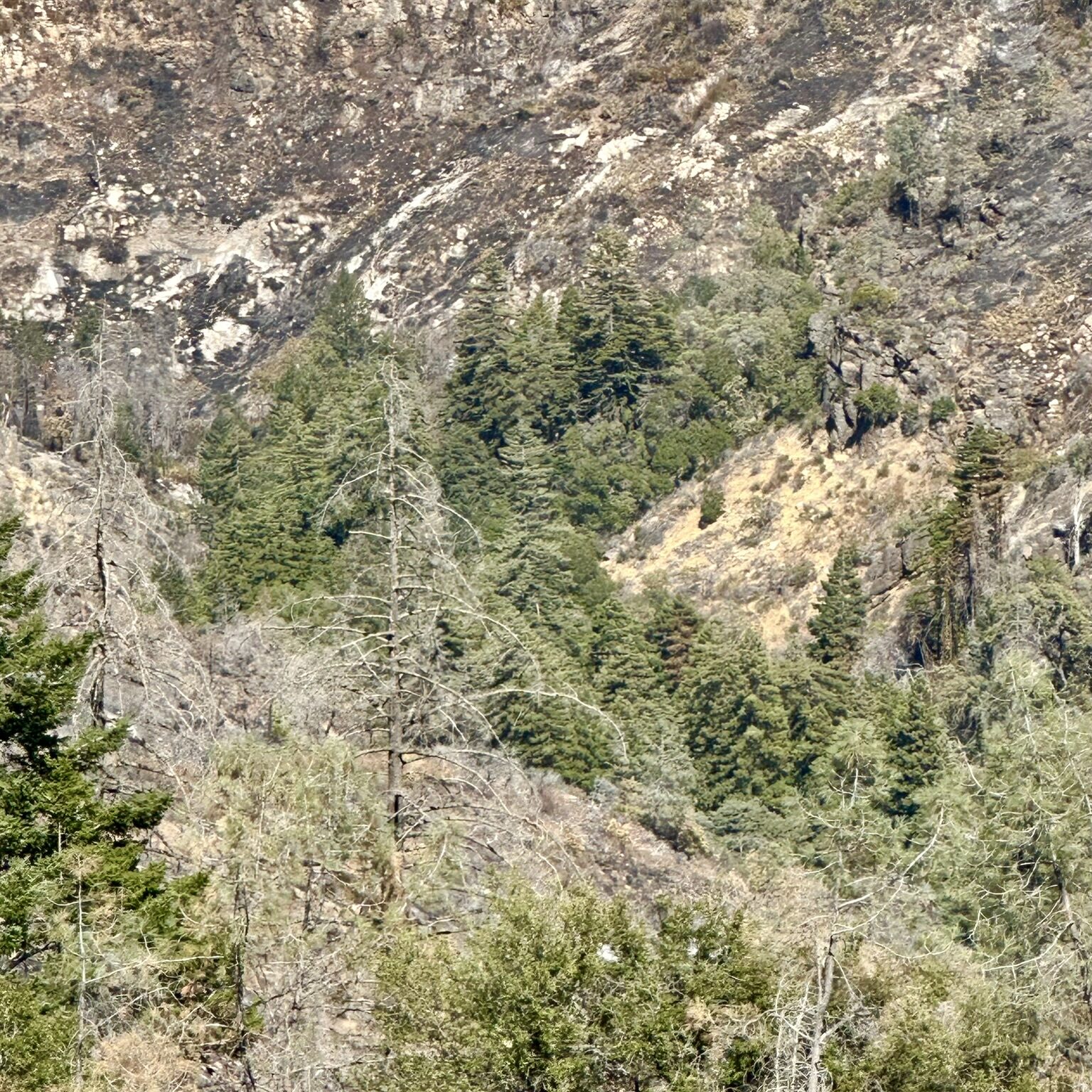
The Pickett Fire produced a patchwork of effects across the preserves, characterized by a mix of high, moderate, and low fire severity.
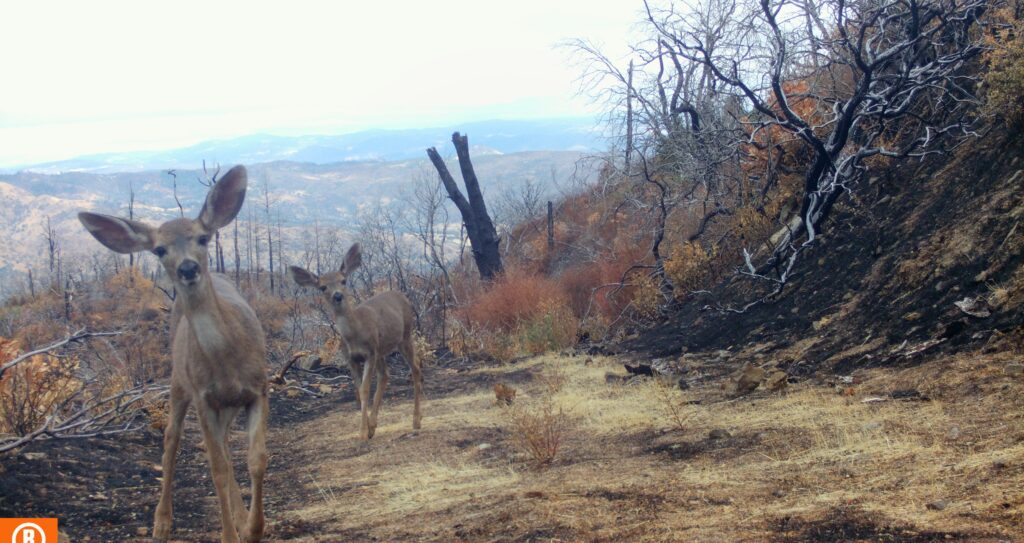
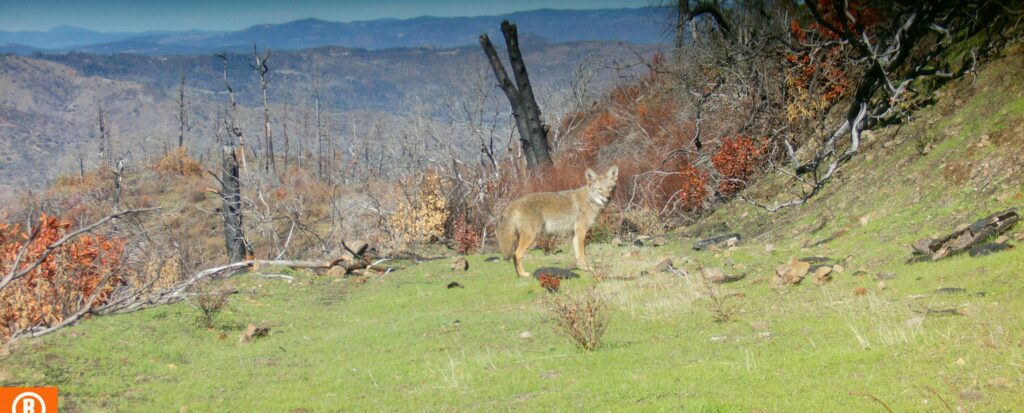
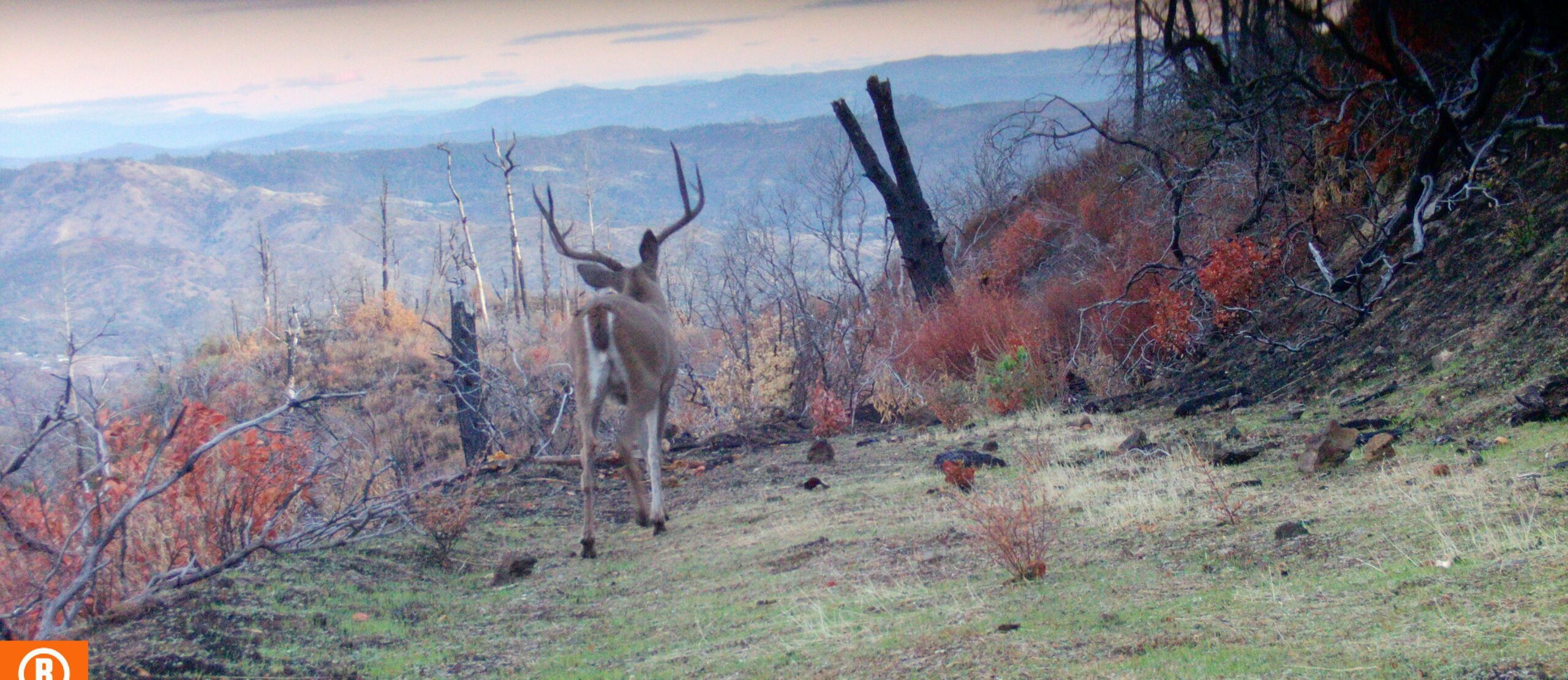
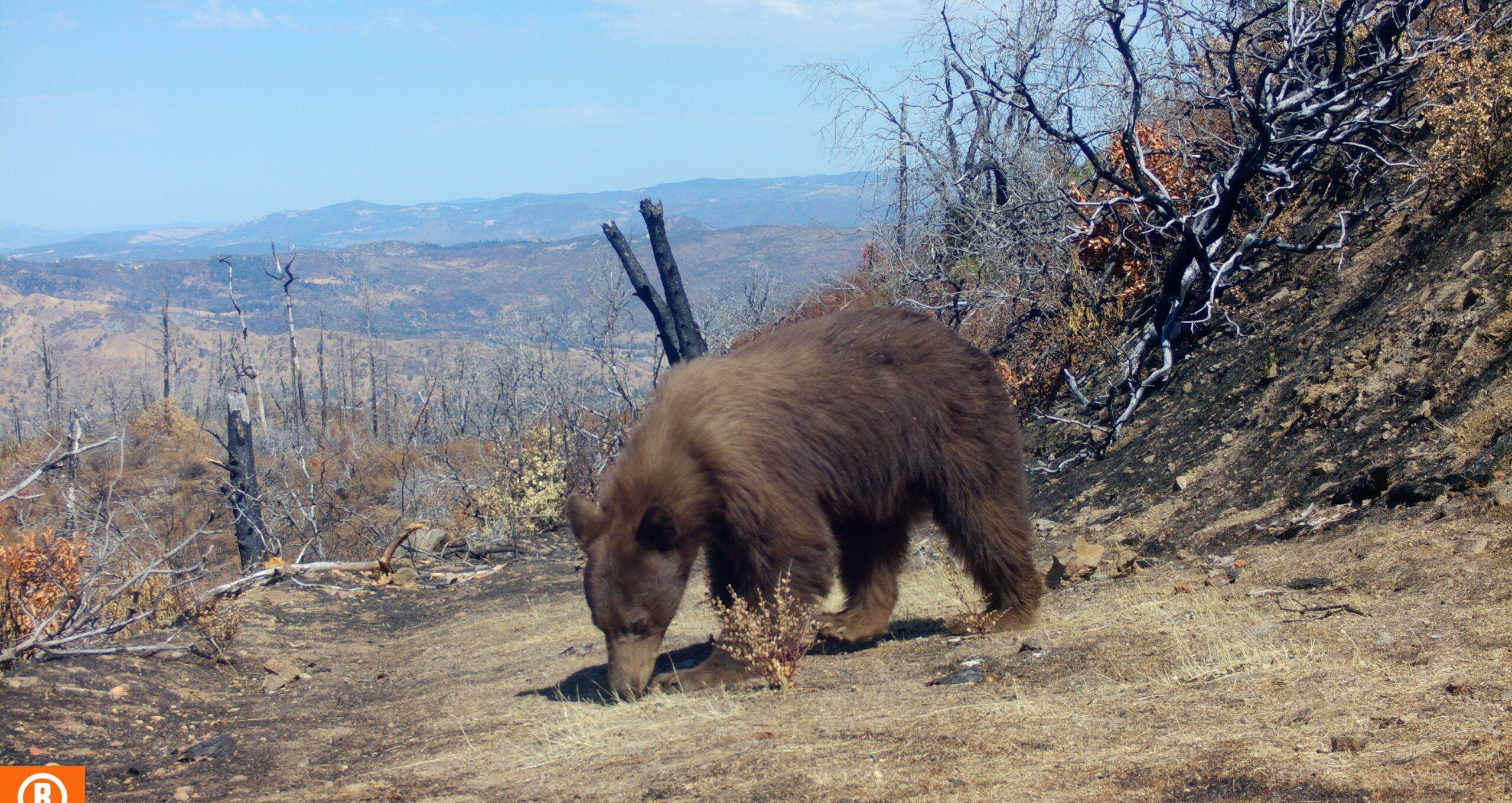
Land Trust stewardship staff have become increasingly concerned about the prevalence of shorter and shorter fire return intervals. All Land Trust land burned in the Pickett Fire had recently burned in the 2020 Glass Fire. While these ecosystems and species are fire-adapted, fire that is too frequent can prevent native species from recovering, favoring non-native and invasive species that thrive with high levels of disturbance. While that remains a concern, signs of resilience and recovery began to emerge just days after the fire. Staff documented multiple native trees, shrubs, and grasses resprouting, while motion-activated cameras deployed in the area as part of a large-scale, long-running wildlife monitoring project showed mammal species quickly returning to burned areas.
Assessment, Repair, and Long-Term Monitoring
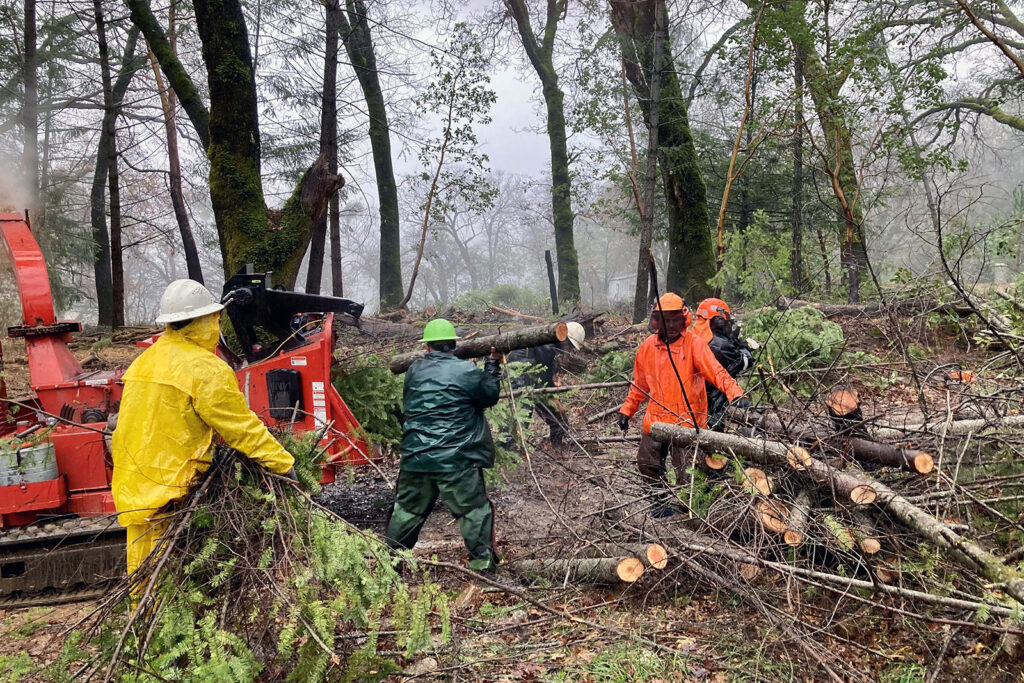
Immediately after containment, the Land Trust began coordinating with CAL FIRE and Napa Firewise on repairing suppression impacts, such as dozer lines and road disturbances, critical work before winter rains. Land Trust staff continue to survey ecological impacts, identify priority restoration areas, and prepare for long-term monitoring.
With nearly 90% of the Land Trust’s preserve lands experiencing fire at least once in the past decade, our team has developed a robust post-fire monitoring program. This includes tracking oak survival after high-severity fires, monitoring changes in the presence of mammal and bird species post-fire, and documenting the occurrence of rare, fire-dependent, and fire-following plant species.
Looking Forward with Gratitude
We extend heartfelt gratitude to the firefighters, emergency personnel, County Supervisors, and partners who acted swiftly as the fire spread across the region and onto our lands.
Wildfire will always be part of Napa County’s natural systems. While the Pickett Fire did not originate on Land Trust property, it demonstrated clearly that proactive land management reduces severity, supports safer suppression, and strengthens ecological resilience.
With continued stewardship and community partnership, these landscapes will regenerate and continue to support Napa County’s remarkable biodiversity.
Unique, Old-Growth Redwoods Weather the Wildfire
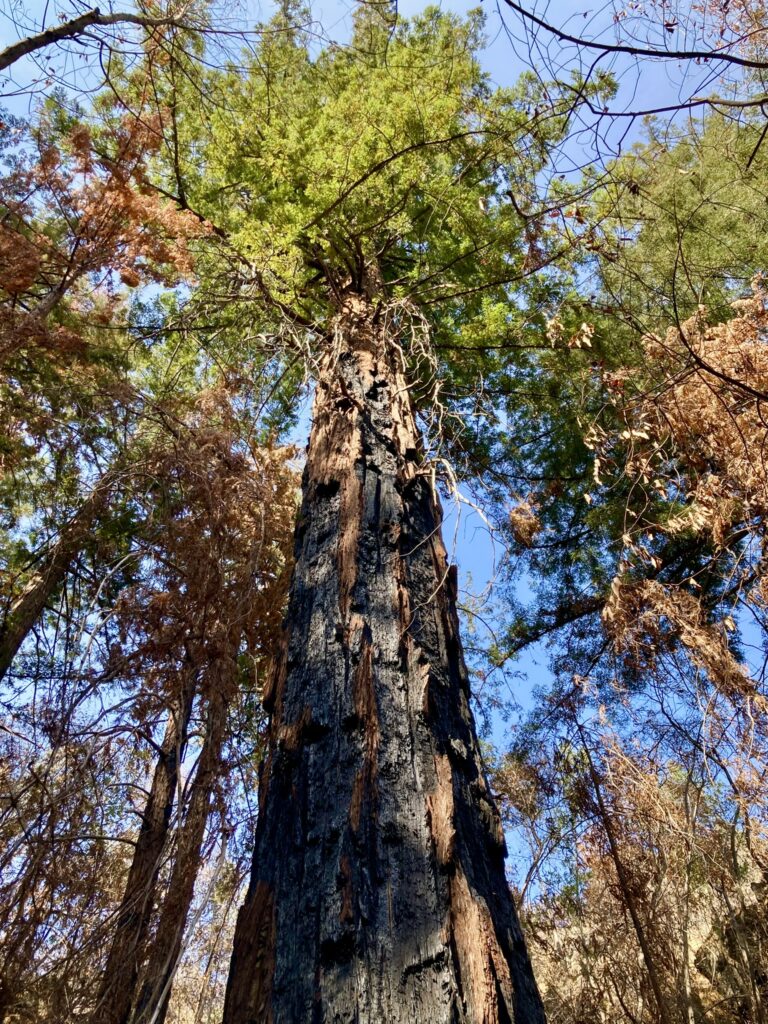
For the second time in five years, unique old-growth redwood stands on the northeastern slopes of the Dunn-Wildlake Preserve have made it through a wildfire. These trees, which have been the subject of research by the Steven Sillett lab at Cal Poly Humboldt, are among the interior-most redwoods within the range of the species.
Because they are isolated deep in remote and rugged canyons, these stands were spared from the logging that occurred in nearly all other redwood forests in Napa County, and they contain trees that are over 800 years old.
These are truly redwoods on the edge – the edge of their range and the edge of their climactic tolerance. They are almost entirely cut off from the coastal fog belt on which redwoods typically rely (redwoods have the ability to take up water directly through their leaves). By comparing annual growth with the climate record, the research showed that these redwoods are very sensitive to drought conditions and high summer temperatures during the growing season.
A testament to their resilience, most of the trees within these stands have now survived both the 2020 Glass Fire and the recent Pickett Fire, despite these fires burning through the entirety of these stands. Tree ring analysis also revealed evidence of older fires in the growth histories, showing that many of these trees have survived multiple fires during their lifetimes.
These redwoods represent one of the most unique and fascinating ecological features within the Land Trust’s preserve network. We’ve had many inquiries from concerned members and supporters about how the redwoods were impacted by the Pickett Fire, and we are ecstatic to report that these resilient organisms made it through!